
Last updated: May 2026 | Originally published December 2024
This guide is drawn from the Practicing Musician professional development session “Advocating for Music Programs”, presented by Troy Peterson, and updated by the Practicing Musician editorial team.
Securing sustainable music education funding remains one of the most persistent challenges facing schools nationwide, yet the case for music programs has never been stronger. Whether you’re a music teacher, administrator, or parent advocate, knowing where to look and how to ask is the difference between a thriving program and a cut one. With major music education foundations directing the majority of their spending directly to program support, the opportunities are there for educators who know how to access them.
The Proven Impact of Music Education Programs
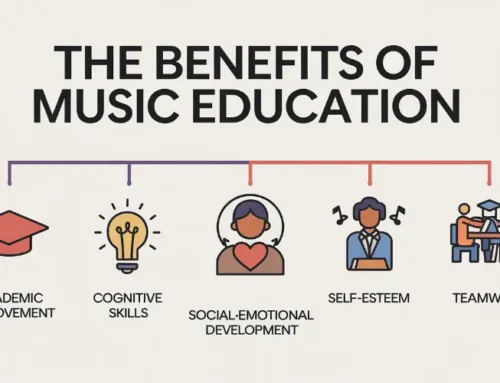
Before pursuing any funding source, build your case with data. Decision-makers respond to evidence, and the research on music education is compelling. Students in music programs consistently demonstrate:
- Higher academic achievement across core subjects
- Improved cognitive development and memory retention
- Enhanced social and emotional skills
- Better school attendance rates
- Increased graduation rates
Document these outcomes in your own program wherever possible. Local data — your students, your school — is more persuasive to your district than national statistics alone.
Traditional Funding Sources and How to Access Them
School District Budgets and Federal Support
District funding is the foundation of most music programs, but the amount you receive often depends on how well you advocate for it. The single most important federal opportunity is Title IV-A funding under the Every Student Succeeds Act (ESSA), which provides federal support specifically for well-rounded education — and music is explicitly included.
The key is making sure your administrator includes music in the district’s Title IV-A spending plan. Many districts have Title IV-A dollars available that never reach music programs simply because no one asked. Come to budget conversations prepared with:
- Data-driven evidence of student outcomes in your program
- Documentation of student growth and achievement
- Examples of community engagement your program generates
- Clear alignment between your program and district-wide educational goals
Grants and Foundation Support
These are the most accessible external funding sources for most music educators. All of the following are actively awarding in 2026:
Donates musical instruments to schools nationwide, with priority given to low-income communities.
Year-round grant awards for public school music teachers. One of the most accessible direct-to-teacher grant programs available.
Supports sustainable stringed instrument programs with a quarterly grant cycle.
Awards instruments and equipment ($1,000–$5,000 value) to public schools and nonprofit music programs. Applications reviewed quarterly. No cash grants — instruments only.
Competitive, emergency, and tour-related grants for music education for children. Particularly interested in programs outside traditional school settings.
Supports music education programs through grants covering instruments, curriculum, and teacher training, with emphasis on underserved communities.
Previously donated instruments to music instruction programs in underserved communities. Currently developing a new grant program — check their website for updates before applying.
Ten winners each receive a piano valued at $10,000. Note: Save The Music does not award cash grants — all support comes in the form of instruments, technology, and professional development. They have helped over 2,800 schools start and sustain music programs nationwide.
Create a specific project request for classroom needs and individual donors fund it directly. One of the most effective tools available — many music teachers receive full funding within weeks.
Prefers supporting programs through sustained partnerships rather than one-time instrument donations. Start with a letter of inquiry.
Supports concert attendance for K-12 students, funding transportation and ticket costs so students can experience live professional music performances.
Grant Deadline Quick Reference
Use this as your annual planning calendar:
| Grant | Typical Deadline | What They Fund |
|---|---|---|
| Mr. Holland’s Opus | March | Instruments (low-income schools) |
| VH1 Save The Music Keys+Kids | March | Piano ($10,000 value) |
| Mockingbird Foundation | August | Broad music education programs |
| Sharon Gewirtz Kids to Concerts | August 15 | Concert attendance for students |
| Classics for Kids | Quarterly | String instruments |
| Give A Note Foundation | Year-round | Public school teachers |
| DonorsChoose | Year-round | Classroom-specific needs |
| Fender Play Foundation | Rolling | Instruments (31 states) |
| NAMM Foundation | Varies | Programs, instruments, PD |
Always verify current deadlines directly with each organization — dates can shift year to year.
Modern Fundraising Strategies
Digital Campaigns and Crowdfunding
Beyond formal grants, online platforms give music educators direct access to donors:
- DonorsChoose — The most effective teacher crowdfunding platform. Specific, concrete requests fund faster than general appeals.
- Amazon Wishlist — Share a public wishlist of equipment needs with your school community. Simple and surprisingly effective.
- Adopt A Classroom — Connects classrooms with donors interested in supporting education directly.
Community Partnerships
Sustainable programs rarely rely on grants alone. Build relationships with:
- Local businesses and corporations looking for community giving opportunities
- Music stores and instrument manufacturers (many have local donation programs separate from national grants)
- Professional musicians and performers willing to donate time or instruments
- Arts organizations and cultural institutions
- Alumni networks and booster clubs
A single strong local partnership can provide more consistent support than an annual grant cycle.
Maximizing Resources Through Technology
Technology has significantly reduced the cost of running a quality music program, especially for schools where instrument instruction isn’t available in person.
Free Digital Learning Platforms
3,500+ structured video lessons across 15 instruments, completely free. For schools where a full instrument program isn’t possible, Practicing Musician gives students structured, sequential instruction with built-in documentation for academic credit. Private lessons ($90/month) are also available for students needing one-on-one instruction.
Other technology tools worth exploring:
- Virtual performance platforms for remote ensemble work
- Digital sheet music libraries (SmartMusic, MusicFirst)
- Remote instruction capabilities for hybrid or online program delivery
Resource Management
- Instrument inventory and maintenance tracking (prevents costly losses and deferred repairs)
- Digital asset management for sheet music and curriculum materials
- Administrative automation to reduce time spent on paperwork
Creating Sustainable Support Systems
One-time grants keep programs alive. Sustainable systems keep them thriving. Build toward both simultaneously.
Strategic Planning
- Establish a dedicated fundraising committee — don’t do this alone
- Create an annual funding calendar with all grant deadlines mapped out
- Develop multiple revenue streams so no single source is a single point of failure
- Build an emergency fund for instrument repair and replacement
- Maintain detailed program metrics — participation numbers, performance outcomes, student growth data
Fundraising Beyond Grants
The National Association of Music Parents recommends diversifying with:
- Product sales partnerships (branded merchandise, music-themed items)
- Community event sponsorships
- Music-themed fundraising events
- Gift card programs that generate passive ongoing revenue
Measuring and Communicating Impact
Funding follows demonstrated results. Make impact visible and easy to share:
- Track student participation and achievement data consistently
- Document program milestones and student success stories
- Calculate and communicate return on investment to administrators
- Share impact reports with stakeholders, school boards, and community partners
- Monitor and report on grant outcomes — funders remember who follows up
Looking Ahead: The 2026 Funding Landscape
Federal education funding priorities are shifting. Music educators in 2026 should stay current on their district’s ESSA allocations and actively monitor any changes to Title IV-A guidance. State-level arts funding programs — including California’s Prop 28 arts block grant — are expanding in some states, creating new opportunities that didn’t exist two years ago. Check with your state music education association for state-specific programs.
The broader trend is positive: music education has strong bipartisan support and a growing body of research behind it. Programs that document their impact and build community relationships are well-positioned to grow.
Take Action Now
- Review your current funding sources and identify the gaps
- Add the grant deadlines above to your calendar today
- Create a DonorsChoose project for your most immediate need
- Schedule a conversation with your administrator about Title IV-A
- Document your program’s impact this semester — you’ll need it for every grant application
For more resources, visit Save The Music’s resource center, NAfME’s advocacy tools, and Practicing Musician’s free lesson library. For professional development on music program advocacy, see the full Advocating for Music Programs session presented by Troy Peterson.
Frequently Asked Questions
Can music teachers apply for grants directly, or does it have to go through the school district?
It depends on the grant. DonorsChoose and Adopt A Classroom allow individual teachers to apply directly. Mr. Holland’s Opus and Save The Music typically work through school districts or administrators. Always check eligibility requirements before applying.
What is Title IV-A funding and can it be used for music?
Title IV-A is federal funding under the Every Student Succeeds Act for well-rounded education, which explicitly includes music and arts programs. Schools receive allocations through their district — music educators should work with their administrator to ensure music is included in the Title IV-A spending plan.
Are there music education grants with rolling deadlines?
Yes. DonorsChoose accepts applications year-round, as do Fender Music Education Grants and the Give A Note Foundation. Others like Mr. Holland’s Opus and the Mockingbird Foundation have annual deadlines typically in spring and summer.
What’s the fastest way to get instruments for an underfunded music program?
DonorsChoose is often the fastest path — teachers can post a project and receive funding within weeks if the request gains traction in their community. For larger instrument needs, Mr. Holland’s Opus and Save The Music offer full instrument grants, though their timelines are longer and applications more involved.
Does Save The Music give cash grants to schools?
No. Save The Music invests in instruments, technology, and professional development resources rather than cash grants. This ensures the support goes directly to student-facing program needs.



Leave A Comment
You must be logged in to post a comment.